
Jacksonville, AL – A new chapter may be beginning for Jacksonville’s historic Profile Mill following an October 5, 2026, ceremony highlighting plans to rehabilitate the longtime industrial property. The proposed redevelopment could bring manufacturing jobs, new housing opportunities and additional commercial development to the area while preserving an important piece of the city’s industrial history.
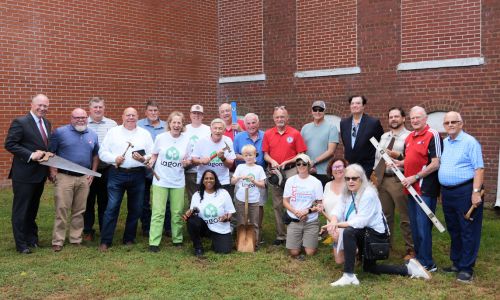
The ceremony, held at the former mill at 415 Alexandria Road SW, brought together project investors, community leaders and historic preservation advocates. The event marked a significant development in an effort that has been underway for nearly two years to identify a sustainable future for the property.

Lagom Development is the company seeking to spearhead the project. However, as of publication, no formal agreement has been signed, nor has a contract been executed. A spokesperson for the City of Jacksonville expressed excitement about the potential impact of the project and the opportunity to put the historic Profile Mill property to productive use.
While the gathering primarily served as a ceremonial event, discussions with individuals involved in the project provided additional insight into the potential scope of the redevelopment.

Pete Hall, identified as the project’s President of Operations and Chief Operating Officer, discussed plans for a manufacturing operation that would produce structural insulated panels, commonly referred to as SIPs. The panels would be used in prefabricated housing construction, potentially allowing homes to be assembled more quickly than with conventional building methods.
According to information shared during the discussion, the proposed facility could initially produce approximately 10 cottages per week. The manufacturing process would use panels measuring approximately 8 feet by 24 feet, consisting of structural exterior layers surrounding an insulated core.
Hall described an approach emphasizing quality control, including specialized training and certification for workers involved in manufacturing and installation. The company also intends to incorporate experienced industry professionals into its training efforts.
Potential Job Creation and Economic Impact
Employment opportunities represent another major component of the proposed redevelopment.
Initial operations are projected to create approximately 25 jobs, with a subsequent phase potentially adding another 10 to 15 positions. Longer-term projections discussed in connection with the Alabama Industrial Development Training program, known as AIDT, suggest the operation could eventually support approximately 249 jobs if the full development plan is realized.
Those figures represent projections rather than confirmed employment commitments.
The company reportedly intends to begin recruitment with a plant manager, allowing that individual to participate in hiring supervisors, maintenance personnel and other employees needed to establish operations.
Hall also discussed plans to offer competitive wages and performance incentives while being mindful of the potential effects of recruitment on existing local employers.
The project’s timeline remains subject to further clarification. Discussions referenced the possibility of establishing an initial operation within approximately two months, with additional phases potentially becoming operational later. A final construction and production schedule has not been publicly confirmed in the materials available.
Preserving the Historic Mill
An important element of the project involves adapting the existing Profile Mill buildings for modern manufacturing while maintaining their historic character.
The property presents structural challenges because portions of the complex were constructed during different periods. As the mill expanded, some original exterior walls became interior walls, including walls that now provide structural support.
Redevelopment would require engineering evaluations to determine how the interior spaces could be modified to accommodate manufacturing equipment without compromising the building’s stability.
Deteriorated structural components may also require repair or replacement.
Despite those challenges, the plans discussed emphasize retaining the property’s historic appearance, particularly its exterior features.
Preservation advocates and community members have spent nearly two years encouraging redevelopment that recognizes the mill’s historical importance rather than allowing the property to continue deteriorating.
The involvement of historic preservation professionals could help guide decisions about which architectural features should be retained as rehabilitation progresses.
Housing and Broader Community Development
Beyond manufacturing, the project could support a larger effort to expand attainable housing opportunities in Jacksonville and surrounding communities.
The proposed cottages are being considered for workforce housing and other residential developments intended to serve individuals and families seeking affordable alternatives to traditional construction.
Hall discussed the possibility of developing approximately five cottages per acre, although actual residential density would depend on local zoning regulations, minimum lot sizes and other development requirements.
The broader concept includes creating opportunities for people to live closer to employment centers, reducing commuting distances and potentially helping communities retain residents and workers.
Additional portions of the mill complex could eventually accommodate commercial uses, including retail businesses or a restaurant. Those possibilities remain conceptual and would depend on future development decisions.
Discussions also included nearby undeveloped property, including approximately 12 acres reportedly owned by the city across the street from the mill. Potential connections to recreational trails, open space and surrounding commercial areas were among the ideas raised.
No finalized plans for those additional uses were identified in the information provided.
Possible Partnership With Jacksonville State University
Jacksonville State University could also play a role in the project’s long-term development.
Discussions included potential opportunities involving student housing, workforce training, research and development, and educational partnerships related to the proposed construction technology.
Such collaborations could create practical learning opportunities while connecting students and graduates with employment and housing options in the surrounding community.
Jacksonville State University President Dr. Don Killingsworth was among the university representatives identified in connection with the ceremony.
However, no formal university partnership or specific institutional commitment was confirmed in the information available.
Next Steps for the Project
Although the October 5 ceremony represented progress toward redevelopment, several details remain unresolved.
Discussions indicated that property acquisition agreements and other legal arrangements were still being finalized around the time of the event. Formal confirmation of the transaction, financing, construction schedule and full development scope will be important in determining how quickly the proposed operation can move forward.
City officials have been described by those involved in the project as supportive of the redevelopment effort.
The potential transformation of Profile Mill represents an opportunity to combine historic preservation with economic development. If the proposed plans advance, the former industrial property could once again serve as a center of local employment while contributing to housing development and investment in the surrounding community.
For now, the project remains in its early stages, with additional announcements expected to provide greater clarity about its timeline, commitments and ultimate scope.