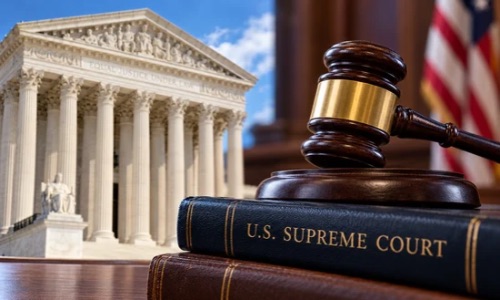

MONTGOMERY, AL – Alabama Attorney General Steve Marshall has joined a coalition of 16 state attorneys general urging the U.S. Supreme Court to consider a case involving parental religious rights and vaccination requirements for students enrolled in online public schools.
The case involves Krystal and Anthony Perry, West Virginia parents who object to vaccinating their daughter based on their Christian religious beliefs. The parents maintain that certain vaccines conflict with their faith because of their understanding of how those vaccines were developed.
According to the attorneys general, the Perrys’ daughter was disenrolled from a West Virginia public school district after the family declined to comply with vaccination requirements. The student had been attending an online-only public school program from home.
The family challenged the requirement in court, arguing that it infringed upon their religious freedoms. Lower courts rejected their claims, prompting the effort to seek review by the U.S. Supreme Court.
Marshall joined an amicus curiae, or friend-of-the-court, brief led by Nebraska Attorney General Mike Hilgers. The brief supports the parents’ position and asks the Supreme Court to hear the case.
“The Supreme Court has repeatedly affirmed that parents, not the government, have the right to raise their children according to their deeply held religious beliefs,” Marshall said. “No family should have to choose between their child’s public education and their faith, yet that is exactly what the Perry family is being forced to do.”
Marshall further argued that constitutional protections for religious liberty should extend to students participating in virtual public education.
The case raises questions about how states and school districts balance vaccination requirements, which are generally established to protect public health, with constitutional protections for religious exercise. Vaccination policies vary by state, including whether religious exemptions are permitted.
The parents’ religious objection concerns vaccines they believe are connected to fetal tissue from abortions. Some vaccines have been developed or tested using laboratory-grown cell lines originally derived from fetal tissue decades ago. That distinction is relevant to the broader discussion surrounding the family’s objections.
The coalition includes attorneys general from Alabama, Alaska, Arkansas, Florida, Idaho, Indiana, Iowa, Kansas, Louisiana, Missouri, Montana, Nebraska, South Carolina, South Dakota, Utah and West Virginia.
The filing does not establish a new legal precedent or change existing vaccination requirements. Instead, it asks the Supreme Court to review the lower courts’ decisions and consider the constitutional questions presented by the family’s case.
The Supreme Court has not been reported in the provided announcement as having agreed to hear the case.