
Alabama – The outdoors is calling, and Alabama’s next generation of explorers is invited to answer.
Alabama State Parks has launched a new Junior Ranger Program designed to inspire young adventurers, spark curiosity, and cultivate a lifelong love for conservation and stewardship of the outdoors.
Open to children of all ages, with activities specifically designed for ages 5–12, the program encourages participation from families, school groups, scout troops, homeschoolers, and youth organizations. Participants are invited to explore Alabama’s natural landscapes while learning about the importance of protecting them.
“Our Junior Ranger Program is about more than exploring the outdoors,” Alabama Department of Conservation and Natural Resources Commissioner Chris Blankenship said. “It’s about inspiring the next generation of conservationists. We want every child who visits an Alabama State Park to leave with a sense of wonder, a deeper appreciation for nature, and the confidence to help protect it for years to come.”
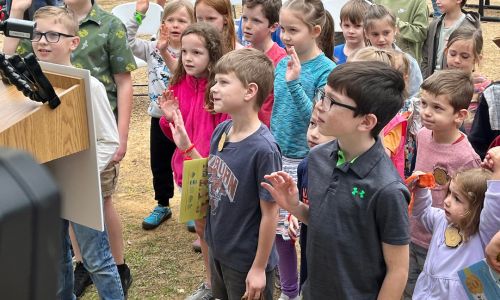
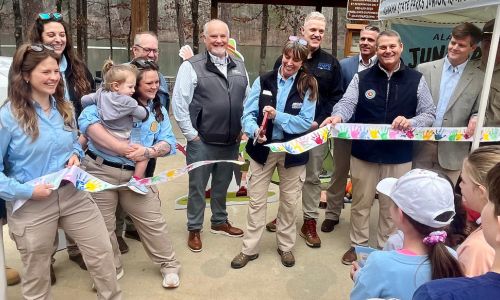
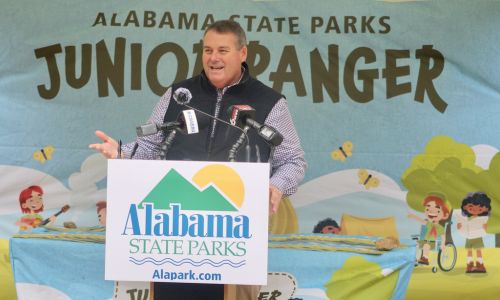
The program was formally launched Tuesday during an event at Oak Mountain State Park. Blankenship was joined by state park leaders and Paul McCormack, president of the National Association of State Park Directors, for the announcement.
Funding for the program was provided through a grant from the Bronco Wild Fund, an initiative of Ford Motor Company that supports conservation, preservation, and responsible outdoor recreation.
“Ford has long been committed to helping preserve public lands and promoting responsible access,” said Natalie Simon, Ford’s manager for enthusiast brand customer experiences. “Bronco Wild Fund makes good on the Ford promise to build a better world where everyone is free to move and pursue their dreams. We’re proud to support Alabama State Parks, through an America’s State Parks access grant, with creation of their Junior Ranger Program—an important educational initiative in Alabama and the local community.”
The Junior Ranger Program is available at all Alabama State Parks, offering children opportunities to explore mountains, forests, lakes, rivers, beaches, and caves throughout the state.
Free program booklets are available online and at park offices, nature centers, and from park naturalists. Many parks will also host guided Junior Ranger activities throughout the year, featuring hands-on experiences, interactive learning opportunities, and special events focused on environmental education.
“This isn’t just a program — it’s a statewide adventure,” Alabama State Parks Director Matthew Capps said. “We’re inviting kids across Alabama to step outside, get their boots dirty and discover something amazing. The Junior Ranger Program turns every park visit into an adventure, and it makes every young explorer into a steward of our state’s incredible natural resources. Today’s junior park rangers will become tomorrow’s conservation leaders.”
Educators and homeschool families can also incorporate the program into lessons on science, ecology, conservation, and outdoor recreation.
Participants who join the Junior Ranger Program pledge to follow several key principles while exploring Alabama’s parks:
• Respect Wildlife — Observe animals from a distance and help keep them wild and safe.
• Leave No Trace — Dispose of waste properly and leave rocks, flowers, and artifacts where they are found.
• Stay Safe — Explore responsibly and stay with family or group members while enjoying Alabama’s natural spaces.
State park officials say the program aims to blend hands-on learning with outdoor adventure while helping young participants understand their role in protecting natural resources.
“The Junior Ranger Program blends hands-on learning with real-world adventure,” Capps said. “It supports educators, engages families, and empowers young people to understand conservation not just as a concept, but as a responsibility.”
The Alabama State Parks Division, part of the Alabama Department of Conservation and Natural Resources, manages 21 state parks covering more than 50,000 acres of land and water across the state. The parks range from Gulf Coast beaches to the Appalachian foothills and offer a variety of recreational opportunities, including day-use activities, lodging, restaurants, and golf facilities. Operations are primarily supported through visitor fees and partnerships with local communities.