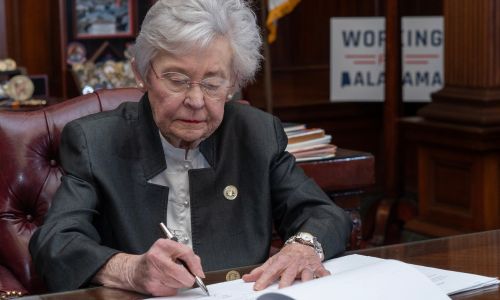

Montgomery, AL – Kay Ivey has signed a series of bills into law during the current legislative session aimed at improving healthcare access, strengthening emergency services, and encouraging healthier food choices among Alabama residents.
The legislation focuses heavily on expanding rural healthcare delivery, supporting emergency medical services (EMS), and addressing preventative care measures. It also includes a measure related to the use of Supplemental Nutrition Assistance Program (SNAP) benefits.
“In December, I announced Alabama’s participation in a new Trump Administration program funded by the ‘One Big Beautiful Bill’ passed by Congress to expand rural healthcare delivery,” Ivey said. “Not wasting a moment, I worked with legislative leaders this session to remove legal barriers to ensure healthcare providers are able to work together to improve healthcare delivery in our rural areas.”
Among the key measures signed into law is the Alabama Rural Health Antitrust Immunity Act (HB605), which provides limited antitrust protections to allow healthcare providers to collaborate more effectively. The law is designed to support shared services, coordinated staffing, and joint initiatives, particularly in underserved rural communities.
The Alabama Physician Assistant Licensure Compact (HB156) allows for streamlined licensing of out-of-state physician assistants, making Alabama the 24th state to join the compact. State leaders say the move is intended to attract more healthcare professionals and increase access to care.
Another measure, known as Treat in Place (SB269), allows EMS providers to be reimbursed for delivering care on-site, even if a patient is not transported to a hospital. Supporters say the change could reduce overcrowding in emergency departments while expanding access to timely care.
Additional EMS-related legislation includes the Expansion of EMS Tuition Reimbursement Program (HB116), which broadens training opportunities through regional offices, and Accepting Military Training for EMS Licensure (HB182), which allows military experience to count toward certification requirements.
Preventative care was also addressed through new laws eliminating certain out-of-pocket costs. Under HB300, beginning January 1, 2027, health plans will no longer be allowed to charge co-pays for supplemental or diagnostic breast examinations. Similarly, SB19 removes co-pays, deductibles, and related costs for prostate cancer screenings for men over 50 or those considered high-risk starting October 1, 2027.
A separate measure, SB57, directs Alabama to request a waiver from the U.S. Department of Agriculture to restrict SNAP benefits from being used to purchase high-sugar items such as candy and soft drinks. The state joins more than 20 others pursuing similar waivers.
Public health measures were also expanded through SB9, which extends existing indoor smoking bans to include vaping devices and other electronic nicotine delivery systems in public spaces.
In addition to legislative changes, the state has secured federal funding to support healthcare improvements. The Centers for Medicare and Medicaid Services has awarded Alabama $203.4 million for its Rural Health Transformation Program, aimed at improving access and outcomes for rural residents.
State officials say the combined efforts represent a coordinated approach to improving healthcare access, workforce availability, and preventative care across Alabama.