

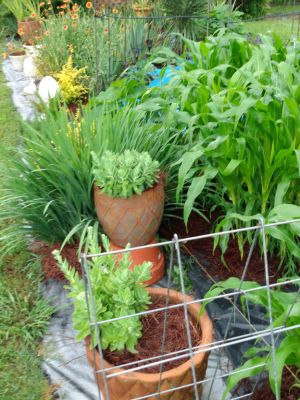
Calhoun County, AL – Gardeners can have small spaces and still grow corn. The first priority is full sunshine—no semi-shade. The second is to create quick-growing pollinator plants. I sow squash seeds and flower seeds like Blanketflowers next to the corn. These pollinator plants help boost your corn’s success, and they grow quickly.
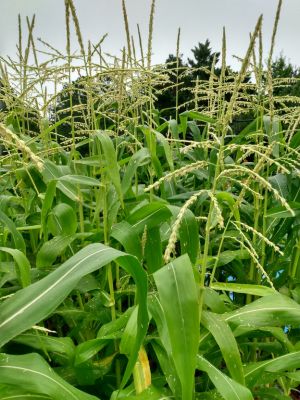
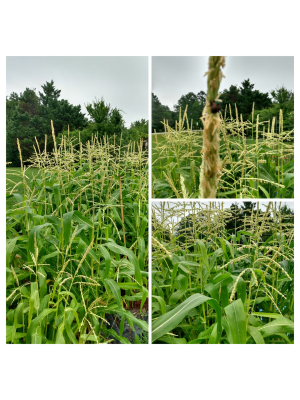
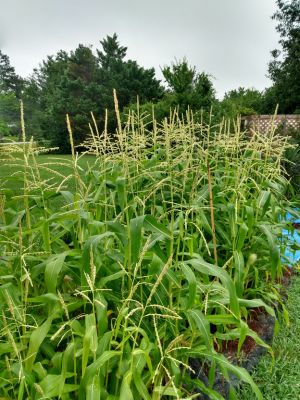
In small areas, you can create compact blocks of square rows, placed close together. Keep in mind that the tassels (the male part of the corn) must pollinate the silks (the female part). Each silk is connected to a kernel of corn on the cob. When you see missing kernels at dinner, it means not all the silks were pollinated. This is why planting rows close together is important—to increase pollination success.

In my opinion, the quickest corn to yield from seed to table is Peaches & Cream Corn. You can harvest ears in about 85 days from germination.
How do you keep birds from eating your new corn seedlings? Before sowing your corn seeds, install 6-foot-tall stakes—one in each corner and one in the center. Use string or jute to create a grid pattern about 12 inches off the ground by attaching it to the stakes. Sow your corn in tight blocks, not spread out. From the air, birds see the string grid and perceive it as a trap. They stay away. Stray animals like raccoons, chipmunks, cats, and others also avoid the area because they sense entrapment. As your corn grows taller, add more string higher up the stakes to deter crows and other creatures from going after the cobs.

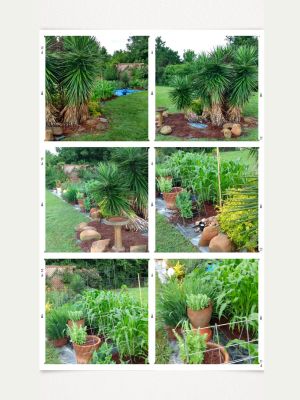
This string method works for any vegetable you’re trying to protect. I plant my corn among flowers because I like a Country Cottage Rustic theme. I think the dried stalks look great and are useful as supports for green beans or cucumber vines.
My second favorite corn is Silver Queen Corn. I also use my dried stalks to create fall garden door bouquets, tying them with ribbons. The dried cornstalks make fantastic mulch to protect perennials over winter.

Betty Clark is a contributing writer. She has been an organic gardener since 1998. The signature flower she grows is Dahlias. She has a straw bale garden, a raised bed garden, and an in-ground garden. Both her surnames are from agricultural farming families (8 generations). Her hobbies include ancestry research, antiques, continued education classes, and workshops. She also has a background in marketing & promotions, including expos. To contact Betty Clark with gardening questions: bettyclark2151959@gmail.com