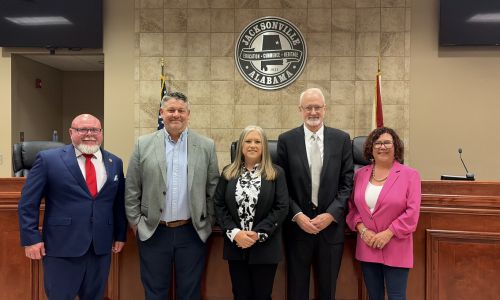

Jacksonville, AL – Candidates seeking to represent Alabama House District 40 gathered Thursday evening at the Jacksonville Public Safety Complex for a public forum hosted by the Calhoun County Area Chamber & Visitors Center Public Affairs Committee. The event was moderated by Keith Kelley, with Henry Mullinax serving as timekeeper. Candidates participating included Bill Lester, Bill McAdams, Chad Robertson, Kaycee Cavender, and Pam Howard.
Questions were compiled from submissions by the public and the Chamber, then ranked by a review committee before being presented to the candidates. Topics ranged from gambling and taxes to education, healthcare, prison overcrowding, and mental health services.
Gambling and Lottery Debate
The opening question focused on casino gambling and a state lottery in Alabama.
McAdams voiced strong opposition to gambling, stating that Alabama has functioned without it since 1819 and arguing that casinos often prey on people struggling financially. He cited his experiences working in cities with casinos as evidence of negative community impacts.
Cavender also opposed casinos and a lottery under Alabama’s current laws, arguing gambling contributes to crime, drug issues, and poverty.
Lester shared a humorous story about “winning” gambling by keeping a friend’s $20 instead of betting it, then expressed opposition to government involvement in gambling, saying it was not the best approach for economic development.
Robertson said he supported allowing voters to decide the issue through a statewide vote if legislation was structured in a way that benefited Alabama.
Howard supported a “clean lottery bill” focused solely on education funding, arguing Alabamians already spend lottery money in neighboring states and that lottery revenue could help support schools and teachers.
Oversight of ALDOT
Candidates were asked whether the Alabama Department of Transportation should face more oversight.
Cavender supported increased oversight and criticized delays in road projects affecting local communities.
Lester agreed, emphasizing the need for more local input and collaboration rather than purely top-down control.
Robertson called for broader restructuring of ALDOT, saying he frequently hears complaints from businesses and residents regarding regulations and project delays.
Howard advocated for stronger rural representation within ALDOT, saying many smaller communities are overlooked for infrastructure investment.
McAdams argued the process itself needs refinement and simplification, while also suggesting Alabama seek more federal transportation grants and reduce bureaucracy.
Taxation and Government Spending
Candidates were asked what issue would justify raising taxes.
Lester said he could not support raising taxes except in an extreme national emergency, arguing individuals should keep more control over their money.
Robertson highlighted tax reductions made during his term, including reductions to the grocery tax, and said he saw no need to raise taxes while maintaining balanced budgets.
Howard said she would instead review corporate tax incentives and subsidies to ensure companies benefiting from state assistance are creating jobs for Alabamians.
McAdams advocated reducing government spending instead of increasing taxes, emphasizing smaller government and prioritizing law enforcement and education.
Cavender also opposed tax increases and disputed statements about continued reductions to the grocery tax, saying legislation passed in 2025 did not include future reductions.
Education and School Choice
Education remained one of the evening’s largest discussion topics.
Robertson defended Alabama’s school choice initiatives, saying parents should decide what educational environment best fits their children.
Howard opposed the CHOOSE Act and school choice legislation, arguing public tax dollars should remain in public schools and warning that future expansions could reduce education funding.
McAdams said education matters more than where it is obtained and encouraged long-term thinking about Alabama’s future workforce.
Cavender, a homeschooling parent, strongly supported school choice and argued education decisions belong to families, not government. She also disputed claims that school choice funding reduced public school funding.
Lester, a retired Jacksonville State University professor and former public school teacher, said he supports educational choice but believes Alabama still has significant work ahead in balancing public and alternative education systems.
Teacher Recruitment and K-12 Education
On teacher recruitment and retention, Howard emphasized teacher pay, benefits, and classroom support.
McAdams argued Alabama’s education system needs to be rebuilt “from the ground up,” criticizing the lack of cost-of-living increases for longtime educators.
Cavender discussed challenges faced by teachers working with students who have special needs and called for additional support and resources.
Lester noted federal education funding challenges ahead and said education should remain a top state priority despite budget concerns.
Robertson pointed to improvements in Alabama’s education rankings since the pandemic and emphasized community involvement and parental engagement as critical factors in student success.
When discussing broader K-12 improvements, candidates raised concerns about standardized testing, classroom size, administrative growth, workforce development, arts education, and trade school expansion.
Jail Overcrowding and Criminal Justice
Candidates were also asked about overcrowded prisons and jails.
Cavender suggested reviewing Alabama’s criminal code to reduce incarceration for nonviolent offenses.
Lester emphasized mentorship, counseling, and early intervention programs as alternatives to incarceration.
Robertson discussed legislation he supported involving accountability courts and veterans courts designed to help nonviolent offenders receive treatment and support rather than incarceration.
Howard advocated shifting from an incarceration-based system to a rehabilitation-focused model with workforce training and drug treatment programs.
McAdams repeatedly tied long-term prison reduction efforts back to improving education and community support systems.
Rural Healthcare and EMS Concerns
Candidates also addressed rural emergency medical services and healthcare access.
Lester described rural emergency response as a major state issue and emphasized the importance of disaster preparedness and emergency response infrastructure.
Robertson referenced legislation passed to assist rural EMS agencies with reimbursement and operational flexibility.
Howard focused on rural hospital closures and advocated Medicaid expansion to improve healthcare access and hospital funding.
McAdams, a former volunteer fire chief, discussed firsthand experiences waiting extended periods for ambulances and argued healthcare access should never be limited by cost concerns.
Cavender referenced recent legislation that allows EMS services to receive reimbursement even if patients decline transportation, while also discussing road infrastructure and healthcare workforce flexibility.
Mental Health and Addiction
The final topic centered on mental health, addiction, homelessness, and jail overcrowding.
Robertson said Alabama needs additional treatment facilities and expanded access to mental health services.
Howard said the state largely dismantled its mental healthcare system years ago and argued law enforcement should not shoulder the responsibility of handling mental health crises alone.
McAdams again emphasized education as a long-term solution to many societal problems.
Cavender focused on strengthening families and reducing reliance on medication-only approaches to mental health treatment.
Lester highlighted the financial and collaborative challenges involved in addressing homelessness, mental health, and prison overcrowding, emphasizing partnerships with nonprofits and community organizations.
Closing Statements
During closing remarks, candidates summarized their platforms and qualifications.
Howard highlighted her community volunteer work, advocacy on issues such as the grocery tax and Medicaid expansion, and her plans to appear on the November ballot as the Democratic nominee.
McAdams campaigned on reducing government size, eliminating taxes such as the grocery tax, and providing relief for seniors.
Cavender emphasized her years of grassroots activism and involvement in legislation involving midwives, constitutional carry, and educational freedom.
Lester discussed his background as a pastor, professor, disaster response expert, and longtime Jacksonville resident, pledging to serve full-time if elected.
Robertson highlighted accomplishments from his current term, including tax reductions, school choice legislation, accountability courts, and workforce development initiatives.
The forum concluded with thanks to the City of Jacksonville, the Jacksonville Police Department, the Chamber of Commerce, and attendees.