
Jacksonville, AL – As originally reported by Brett Buckner with the JSU Media Department, Jacksonville State University’s Department of Criminal Justice and Forensic Investigation is experiencing major expansion after relocating to Ramona Wood Hall in 2024 — a move that university leaders say has transformed both academic opportunities and hands-on training for students. The department has tripled in size since 2017 and is continuing to grow.
The department was originally housed in Brewer Hall for its entire existence. Its relocation came after the College of Education and Professional Studies moved from Ramona Wood Hall to the newly renovated CEPS Complex, formerly Kitty Stone Elementary School, in fall 2023. The change opened the way for Criminal Justice and Forensic Investigation to establish a new, specialized home.
“The move to Ramona Wood Hall has been incredible,” said Dr. Dean Buttram, Department Head and Professor. “We shared Brewer Hall with three other departments and did not have the space needed to reach our full potential.”
New Facilities Drive Academic Expansion

Since moving into its new space, the department has added a wide range of state-of-the-art labs and training environments designed to immerse students in real-world investigative work. These include:
-
A mock courtroom
-
A mock jail cell and booking area
-
Interview and interrogation rooms
-
A seven-room crime scene house
-
A blood spatter lab
-
A digital forensics lab and classroom
-
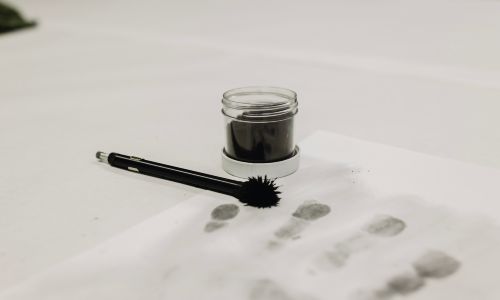
A fingerprint and trace evidence lab
-
A cadaver lab
-
The CJ Research Institute
-
A student lounge and special event room
Dr. Buttram said that growth is expected to continue. “With the creation of the new laboratories, new minors and degrees — that should all be in place within the next academic year — the increase should be even greater within the next three to five years.”
Chris Haney, Instructor and Coordinator of the Undergraduate Forensic Investigation Degree Program, described the move as a turning point for students and faculty. “Prior to the move, we had no room to provide labs for our students to be more hands-on,” he said. “Having the additional space of our own building has been an unbelievable blessing. We are consistently planning and discussing the vision needed to keep our department on the cutting edge.”
New Digital Forensics Minor
The department has launched an 18-hour Digital Forensic Investigation minor, covering cybercrime investigation, social media investigations, and computer security. The courses are led by Dr. Sadik Arin, an assistant professor who previously directed the Turkish National Forensic Science Department.
“The digital forensics minor is actually a big deal,” said Dr. Buttram. “Basically, it’s all about technology and the evidentiary role it plays in criminal cases. This is the future of criminal investigation.”
Cadaver Lab Sets JSU Apart
Among the new additions, the cadaver lab has been a significant draw. Operated by Joseph Scott Morgan, Distinguished Scholar of Applied Forensics, it is the only cadaver lab in the region dedicated specifically to forensic science rather than medical training.
“It sticks with the spirit of who we are at Jax State,” Morgan said. “Our focus, for years and years, has been to produce productive citizens — from teaching to nursing to law enforcement to forensics.”
Morgan emphasized that exposure to real post-mortem investigation gives JSU students a critical advantage. “Most police officers, when they go out to their first death scene investigation, that’s often the first dead body they’ve ever seen,” he said. “You cannot be an effective investigator until you break through that.”
Twenty-five students currently participate in the cadaver lab, working with a single body donated to science. Morgan provides lectures once a week and separates students into smaller groups for lab days, guiding them through the process at a pace that helps address fear, hesitation, or anxiety.
Preparing Job-Ready Graduates
The department’s new facilities and programs are designed to align with existing law enforcement partnerships, including the Northeast Alabama Law Enforcement Academy (NEALEA), the Center for Applied Forensics, the Center for Best Practices in Law Enforcement, the Alabama Investigator’s Academy, and the Southeastern Leadership Command College.
Pending SACSCOC approval, a Master of Science in Forensic Investigation is planned for fall 2026, along with new minors in Paralegal Studies and Law Enforcement Drone Piloting.
The department has also launched a Law Enforcement Academy minor, allowing selected students to attend NEALEA, earn Alabama Peace Officers Standards and Training Commission (APOSTC) certification, and serve with the JSU Police Department before graduation. Upon completing the program, students hold a bachelor’s degree, APOSTC certification, and a full year of field experience.
“Our department is producing more quality than ever,” Haney said. “If you are a student interested in criminal justice or forensic investigation, there is no reason to go anywhere else. Jax State will prepare you, and your degree will put you at the top of the list when applying for those jobs.”
With its expanded home, new programs, and groundbreaking cadaver lab, JSU continues working to prepare the next generation of forensic and law enforcement professionals.