

ANNISTON, AL – The City of Anniston held public interviews for the city manager position on Tuesday, October 1, 2025, with three candidates presenting their qualifications and visions for the city to council members and community members in attendance.
Mayor Ciara Smith presided over the interviews, joined by Councilmembers Lewis Downing (Ward 1), D.D. Roberts (Ward 2), and Joe Harrington (Ward 3). Councilmember Millie Harris (Ward 4) was absent due to surgery the previous day but submitted questions that Mayor Smith asked on her behalf.
The candidates interviewed in alphabetical order: Kenneth Free, Derek Swanson, and Jeffrey Thornton.

Kenneth Free
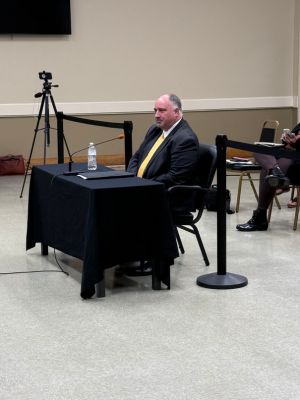
Opening Statement: Free introduced himself as an Anniston native, born at Anniston Ramola Hospital in the 1970s. He joined the military at 17, serving 20 years and rising from enlisted private (E2) to Chief Warrant Officer 3. His military service included tours in Iraq and Afghanistan, where he earned a Bronze Star, and concluded with a position at the Pentagon working for Admiral Mullen, for which he received the Defense Superior Service Medal.
After retiring from the military, Free joined the U.S. Department of Commerce, then moved to the U.S. Department of Housing and Urban Development (HUD) in 2014. He worked directly for the Secretary of HUD, traveling nationwide to observe community development challenges and successes. In 2019, he returned to Alabama as HUD’s state director, serving as the liaison for elected officials and communities across Alabama. He later became deputy regional administrator, covering the southeastern United States.
Free emphasized that he “left the military rank there” when transitioning to civilian service, and stated he has never received less than an outstanding or excellent rating throughout his career since age 17.
Key Questions and Responses:
On using HUD experience in Anniston: Free stated he understands the city manager works for the council and mayor, implementing their policies while managing day-to-day operations. He emphasized pursuing all available grant opportunities, noting many communities fail to apply for available funding. He highlighted his grant writing skills and mentioned Anniston receives approximately $750,000 annually as an Entitlement City, stressing the importance of utilizing all funds rather than returning money to the federal government.
On affordable housing and economic development: Free proposed requiring a percentage of new developments be set aside for affordable housing, citing Birmingham’s “Hope 6 Project” where affordable units are indistinguishable from market-rate units. He also suggested revitalizing dilapidated areas by renovating one house per neighborhood to inspire community pride and encourage residents to improve their own properties.
On why he’s the right candidate: Free explained that leaving Anniston at 17 and experiencing military service and federal government work shaped his perspective in ways staying local would not have. He cited his diverse experience – military leadership, Commerce Department tourism work, and HUD community development – as building his resume for this specific role. He emphasized his philosophy of asking daily, “What am I going to do today to make that better?” and wanting to instill this mindset in all 400+ city employees.
On community-police relations: Drawing from his background as an Army CID agent, Free advocated for community policing where officers walk streets, talk with residents, and build relationships so children aren’t afraid of police but recognize them by name. He noted his son had just started with the Gaston Police Department that same day.
On leadership accountability: Free emphasized holding people accountable from top-level leaders to lowest-level workers. He stated everyone should receive quarterly counseling and performance evaluations, including himself. He advocated providing training and resources to help employees meet standards, but removing those who consistently fail to perform after receiving support. He stressed the importance of training managers, noting most organizations lack the extensive leadership training provided by the military.
On being decisive yet diplomatic: Free stated that making decisions based on available information and experience is critical, citing his military service in combat zones where decisions affected lives. He emphasized owning wrong decisions made in good faith. Regarding diplomacy, he mentioned visiting every department to understand their needs and challenges, ensuring employees know him and feel comfortable approaching him, even when his decisions may not be popular.
Closing Statement: Free thanked the council for the opportunity and explained he wouldn’t call it his “final chapter” but expressed that bringing his worldwide knowledge and experiences back to his hometown to help the city grow would be meaningful before full retirement. Mayor Smith thanked him for his service and indicated a decision would be made at a later date.
Derek Swanson
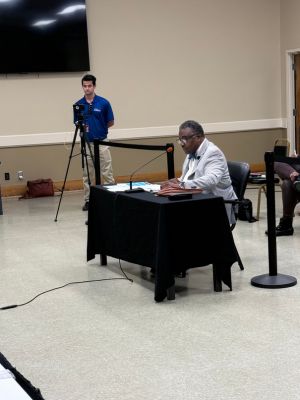
Opening Statement: Swanson began by addressing his recent termination from the City of Talladega, stating he was fired on Monday, September 29th, while on sick leave and unable to defend himself. He emphasized that his character and credibility, built throughout his career, are paramount to him. He expressed frustration that he couldn’t rebut claims made about him and acknowledged that media coverage may have distorted the situation.
Swanson read from a prepared statement expressing that he “fell in love with a city that didn’t love me back” in Talladega, though he noted only two council members supported him as tensions grew. He stated he could only perform 55-60% of his job due to constraints but was proud of his accomplishments, particularly completing over 95% of short-term goals he claimed were designed to make him fail.
He described challenges including lack of support, respect, and communication from the Talladega council, violation of code of conduct when a council member directed him to fire the police chief, and a January 27th attempt to terminate him without cause after he documented a council member’s improper conduct. He stated one council member told him directly, “I don’t know when we’ll fire you, but we’re going to fire you.”
Swanson emphasized his integrity, his daughter depending on him at Tennessee State University, and his recent recognition as recipient of the Sam Gaspin Excellence Award from the Alabama City County Management Association (ACCMA), for which he now serves on their board of directors.
Key Questions and Responses:
On transparency and city goals: Swanson explained his concept of “city informationals” (similar to town halls) where short-term goals are presented to the public with council members present, showing progress toward destinations. He emphasized posting updates on the website and monthly progress reports, noting he created seven updates during his Talladega tenure. He stressed the importance of determining how council wants to communicate – email, face-to-face, text, or all three – and maintaining that transparency.
On why Anniston and why him: Swanson stated he thrives in situations needing assistance, having served throughout his career. He emphasized his public safety background, ability to think quickly, and experience identifying weaknesses through SWOT analysis. He described his vision for creating an internal strategic plan to strengthen the “nucleus” of city operations, ensuring the foundation is solid. He was drawn to Anniston’s “model city” designation and wants to help establish mission statements, vision statements, mottos, and core values so the world looks to Anniston for guidance. He emphasized the importance of controlling toxic employees and building strong internal operations.
On comprehensive planning: Swanson discussed the importance of communicating plans clearly for understanding. He mentioned Talladega had a recently passed 10-year comprehensive plan and explained the need for community feedback through public information officers. He emphasized plans cannot sit on shelves but must be implemented, with feasibility studies conducted to distinguish needs from wants. He described creating an internal strategic plan with department heads that feeds into the city’s strategic plan, which then unifies with the comprehensive plan to show measurable progress.
On keeping tourism dollars local: Swanson acknowledged this requires community-wide effort and mentioned researching the economic impact on city management. He proposed using IT software to track where visitors stay geographically, conducting market analysis to understand why they spend money elsewhere, and implementing SWOT analysis to identify threats and opportunities. He emphasized the importance of marketing the city effectively to capture tax dollars.
On police-community relations: Swanson described placing a police officer to live in a high-crime apartment complex in Talladega, where the officer’s presence and community walking reduced crime and helped residents feel safer. He emphasized knowing what’s happening in communities to make sound decisions, showing police presence, and addressing problems head-on to ensure all citizens can live in peace regardless of neighborhood.
On professional development: Swanson described presenting at conferences through ACCMA and creating an internal program called “SOLO” (Stuck On Leadership and Management Only) in Talladega. He emphasized developing employees so they’re equipped to represent the city confidently, explaining that when employees see a future and don’t feel they’ve hit a ceiling, they become productive and eager to come to work. He stated, “When someone from Anniston walks into any room, I don’t care what meeting in the state of Alabama, we shut it down.”
On his Fire College Commission appointment and its relevance: Swanson explained this supports making Anniston a model city. He mentioned working with the fire chief on ISO (Insurance Service Office) ratings, noting a Class 1 rating is best. His commission role could help attract more training to Anniston’s training site, increasing funding and ensuring state-of-the-art equipment. He emphasized making the training facility even better than it already is.
On fire code challenges downtown: Swanson stated the fire code cannot be deviated from without asking for trouble, but suggested working as a team to assist businesses while following codes. He mentioned researching how historic districts in other cities handle similar issues and emphasized understanding what businesses belong downtown and how to support them while maintaining safety standards.
On Anniston’s greatest challenge: Swanson stated he needed to be in the position to truly assess internal challenges. He indicated there are always internal issues needing resolution in any organization, emphasizing the importance of getting everyone aligned on direction, accountability at all levels, and succession planning to ensure operations continue functioning properly even during transitions.
Closing Statement: Swanson reiterated his appreciation for the opportunity and emphasized his track record and proven results. He pledged to work diligently on grants to subsidize expenses, stressed the need for having master plans ready for sidewalks, pavement, ADA transitions, and transportation, and stated all existing plans must be evaluated for readiness. He expressed confidence in his preparation to guide the city forward, deliver adequate information for council decision-making, and enforce those decisions. He concluded by thanking the council for listening to his perspective on Talladega and reiterating his strong interest in the Anniston city manager position.
Jeffrey Thornton
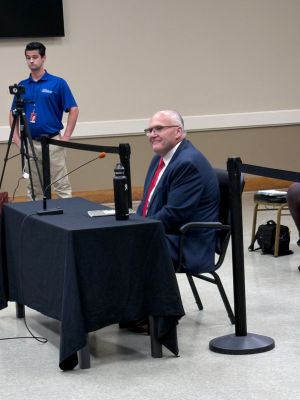
Opening Statement: Thornton began by sharing his Alabama roots – his mother was born in Central Ashville, with family in the area and in Anniston’s West Side. His grandparents took him to Mount Cheaha growing up. Born in Flint, Michigan, he got involved in civil service through Boy Scouts, Junior Achievement, 4-H, and volunteering for ambulance service operating three ambulances in multi-jurisdictional areas.
His career path included being recruited by Kmart Corporation, which he said taught him to run government like a business. After seeing “the light at the end of the tunnel” dimming at Kmart, he bought into a printing and publishing company before selling it. He then worked as a 911 telecommunicator for 90 days but found it frustrating compared to hands-on helping. He moved into airport management, eventually managing a joint-use civilian-military airport in northern Michigan with economic development opportunities in rent zones.
Thornton became county administrator in Alpena County, where he worked with elected officials including serving as a special deputy heading up the sheriff’s dive team. He managed parks and recreation and learned about recreation tourism. He later worked in Nagaunee in Michigan’s Upper Peninsula, dealing with mine closures affecting 400+ workers and receiving a governor’s award for the response. In 2006, Alpena County won recognition for bringing high-speed internet to the county through a consortium with the hospital, college, and city.
He then worked in Caledonia (outside Grand Rapids) near where protests occurred after George Floyd’s death, focusing on economic development and purchasing a building for village hall. He noted he was recruited back to Alpena County but ultimately returned to Nagaunee when his current employer got nervous about him “shopping.” He concluded by sharing he’s been married over 25 years with a 16-year-old daughter, and feels privileged for the opportunity.
Key Questions and Responses:
On tying economic development to recreation: Thornton discussed experiences with recreation conflicts – cross-country skiing versus ski-joring (dogs pulling skiers), similar to Anniston’s horses versus bikes debate. He explained that people who recreate extensively often become entrepreneurs or work remotely, citing Traverse City, Michigan’s success with recreation-driven economic development. He emphasized people need opportunities to try different approaches, stating, “As long as you’ve got people trying, somebody will be successful.”
When asked for specific examples, he detailed Alpena County’s campground marketing strategy: addressing conflicts by marketing three campgrounds differently – one as the “play campground” with jet skis and parties, one for quieter experiences with grandparents, and one family-oriented. This reduced police calls, increased revenues, and created waiting lists. In Nagaunee, developing trails brought coffee shops, sandwich shops, and bars, with wayfinding signs directing trail users into town. In Caledonia, economic development focused on housing, which increased business at grocery stores, service facilities, and restaurants. He emphasized recreation attracts people, and mentioned dog parks as popular amenities.
On why Anniston, why now, and why him: Thornton stated, “My heart’s in Alabama,” referencing his grandfather’s license plate. He discussed climbing mountains in the area and the recreational opportunities he enjoyed while visiting family. He was drawn to apply after seeing Mayor Smith’s enthusiasm on social media and noting the council has become active and progressive in recent years. He explained he grew tired of making national news in Michigan’s Upper Peninsula for harsh weather, and wanted his daughter to experience culture in the Grand Rapids area. He emphasized Anniston’s location between Birmingham and Atlanta and its ongoing downtown construction as evidence of positive change from 25 years ago when Noble Street was empty. He stated, “With my experiences, I think I can add something, hopefully.”
On making difficult but necessary decisions: Thornton described Nagaunee’s successful special tax (millage) vote for equipment when they had never voted for anything except schools. The oldest snowplow was older than him, so he promoted a capital assets millage by displaying aging equipment on the front lawn of the meeting hall with age labels, showing transparency about why funding was needed. Despite initial negative reaction, voters approved it and later renewed it. He also mentioned the fire department choosing to rebuild a chassis for $300,000 instead of buying a new $600,000 truck, which scored community points for fiscal responsibility through honest communication.
On small business experience: Thornton discussed working for Kmart (big business) then owning a small business himself. He emphasized helping entrepreneurs, noting only 10% of their efforts typically succeed. His philosophy: “Number one, get out of their way” – ensure proper permits and inspections, but let them operate. He cautioned about being too hands-on with details like parking lot layouts unless safety issues arise, and stressed consistency in treating businesses while acknowledging some may perceive favoritism. He stated small business owners need guidance to ordinances and codes, then space to execute their vision.
On airport management experience and Anniston’s airport: Thornton clarified that Councilwoman Harris had mistakenly referenced “Dearborn, Michigan” in her question – that airport is privately owned by Ford Corporation. His experience was at Alpena Regional Airport, a joint-use facility with civilian carriers and military training for C-5 Galaxies. He emphasized good relationships with the military and the Fixed Base Operator (FBO), noting Anniston Aviation serves as chamber ambassadors at the airport. He observed “big players” fly privately into Anniston’s airport, creating economic development impressions. He discussed drone manufacturing opportunities and noted Anniston’s military activity makes it more secure than typical general aviation airports. He mentioned Oscoda, Michigan’s former Wurtsmith Air Force Base, where a cargo hauler and engine rebuilding subcontractors created employment and housing demand. He supported creating an airport authority with representation including Oxford and Jacksonville State University’s new aviation program, noting many stakeholders are affected by the airport.
On educational background: Thornton stated he attended Lansing Community College and Michigan State University but doesn’t have a degree because Kmart recruited him with “big dollars.” He noted continuing education through professional associations, membership in AAME (a national organization), and serving on Michigan’s Municipal League Board despite lacking a degree. He was involved with Northern Michigan University’s master’s program, teaching students despite not having a master’s himself. He emphasized teaching EMS, public speaking extensively, and learning daily from professional sources rather than having outdated formal education.
The Calhoun Journal confirmed with a representative from City Hall that Mr. Thornton’s resume stated he attended a Master’s Level program at Northern Michigan University; however, during the interview he acknowledged he doesn’t have a degree. A requirement for the City Manager’s position is a minimum of a Bachelor’s degree, which he does not hold.
On achieving debt-free status in Caledonia: Thornton credited Dave Ramsey’s principles applied commercially. His approach: categorize budget items as “wishes, wants, needs, gotta haves,” prioritizing like EMS triage. He worked with a treasurer who was previously just a bank teller, so he handled tasks like calling around for CD rates to maximize returns. He emphasized save, save, save, then comparing buying versus leasing options (mentioning Ford’s five-year lease programs for government). He noted leaving Caledonia debt-free, though they subsequently spent on their “wish list.” He never had audit problems requiring corrective action explanations in any governmental position.
On background check concerns: Thornton mentioned one speeding ticket about 25 years ago, then addressed his Nagaunee departure. He explained the council directed him to demolish a half-collapsed building after the owner couldn’t rebuild it despite years of trying. Following ordinances, they demolished it and placed the cost on the owner’s taxes and other properties he owned. That owner got elected to council along with someone who had defaulted on a cable system contract and resented collection efforts. Both targeted Thornton, with one council member making threats. He noted those two council members were subsequently taken to court by the city and lost, with one fleeing the state to avoid tax debt. This, combined with family health issues (losing both parents within six months), led to his departure with a severance package. He stated he’ll pass background checks and has passed several in recent months.
On top three priorities: Thornton asked what the council’s top three priorities would be. Mayor Smith responded that priority one is addressing internal issues she observes, emphasizing the need for a strong city manager to address deeply rooted problems while supporting employees and ensuring accountability. Priority two is improving the working relationship with Anniston City Schools and maintaining constant communication with the superintendent. Priority three is building regional partnerships, including potentially playing Oxford in sports as a sign of moving past historical divisions.
Councilmember Roberts emphasized understanding the need to unify the community, recognizing underlying tensions in different corners of Anniston, respecting different perspectives and walks of life, and strong leadership that understands who they’re leading. He noted the importance of getting different parts of the city (Country Club, Carver Center, Norwood, South Highland, Blue Mountain) to unite.
Councilmember Roberts then emphasized his constituents’ priorities: organization, street conditions (“in powerful condition”), and city cleanliness with trash problems everywhere.
Thornton responded by discussing trash pickup programs, teaching habits early to children, and the need for council backing when employees enforce ordinances. He noted people will complain about tickets, so unified council support is essential. On prioritizing blight issues, he mentioned Michigan’s vehicle ordinance (must have current license plate, insurance, and be drivable) and assessing costs to property owners while first educating and offering help – like organizing community groups (Rotary, Kiwanis, scouts) to help elderly residents with cleanup projects. He emphasized FEMA training showed communication failures in every exercise.
Closing Statement: Thornton expressed appreciation for the opportunity and acknowledged being an outsider but having area roots and relevant experience. He stated he’s not a miracle worker and success requires community acceptance and teamwork. He noted Anniston’s diverse culture, mentioning being pleasantly surprised by a Hebrew temple and appreciating diversity from his mixed-culture upbringing. He emphasized equal service for all areas regardless of reputation or property values, respect for all residents, and his positive experiences networking in Anniston (meeting the county chair, visiting the bike shop, shopping downtown). He acknowledged not having a formal degree hanging on the wall but emphasized proving his capabilities through results. Mayor Smith thanked him for traveling to Anniston and meeting community members, stating a decision would be made at a later date.
*** Mr. Thornton referred to the Anniston Fire Chief and Police Chief as “short-timers” and stated that AFD Chief Phelps indicated he would be retiring in less than a year. The Calhoun Journal spoke with Anniston Fire Chief, Johnnie Phelps, who stated, “I am proud to lead the Anniston Fire Department and the amazing men and women that make us strong. I have no intention of leaving this department in a year or anytime in the foreseeable future. I spoke about a succession plan because it is one of my duties as chief to think about succession planning. You must have plan in place for someone to take over in case of an emergency. The fire service is an inherently dangerous job and we should always be prepared for any and all emergencies”.
The City of Anniston did not announce a timeline for the final selection during the October 1st interviews.