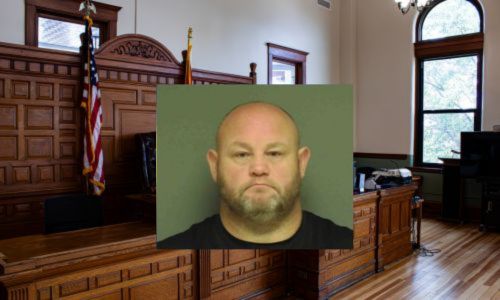

CALHOUN COUNTY, AL — Christopher Westmoreland was sentenced Friday in Calhoun County Circuit Court after being convicted in April on charges of aggravated cruelty to animals and practicing veterinary medicine without a license.
Judge Jennifer Weems sentenced Westmoreland to the maximum allowed under Alabama law on both convictions. On the aggravated cruelty to animals conviction, Westmoreland was sentenced to 10 years, split to serve two years day-for-day in the Alabama Department of Corrections, followed by 36 months of supervised probation. He was also ordered to pay a $15,000 fine, along with court-ordered fees and restitution.
On the charge of practicing veterinary medicine without a license, Westmoreland was sentenced to 90 days in the Calhoun County Jail, to be served consecutively after the Department of Corrections sentence. He was also ordered to pay a $500 fine and related fees.
Westmoreland received 24 days of jail credit toward the Department of Corrections sentence. His request for diversion, community corrections, or serving the split sentence outside the physical custody of the Alabama Department of Corrections was denied.
As part of probation, Judge Weems ordered that Westmoreland’s supervision remain through the Calhoun County state probation office and not be transferred to another county. He may not reside with pets, animals, or reptiles, and may not accept employment or volunteer in any capacity involving contact with animals. Due to testimony regarding the mishandling of controlled substances, he was also ordered to complete an evaluation for substance-use issues and follow all recommendations. He was further ordered not to consume alcohol or frequent establishments where alcohol is served.
Westmoreland was found guilty on April 17, 2026, following a multi-day jury trial. The jury convicted him of aggravated cruelty to animals and practicing veterinary medicine without a license after hearing testimony from former shelter employees, veterinary professionals, investigators, and expert witnesses.
The case centered on allegations involving euthanasia procedures performed at the Calhoun County Animal Shelter during Westmoreland’s tenure as director. Prosecutors presented testimony that intracardiac injections, commonly referred to as “heart sticks,” were performed on animals that were not properly sedated or rendered fully unconscious. Witnesses also testified that rabies vaccinations were obtained, transported, and administered in a manner that violated Alabama law.
During sentencing, the court referenced testimony from the trial, including evidence that Westmoreland had been trained as a certified euthanasia technician and had knowledge of proper euthanasia procedures. Judge Weems noted that expert testimony established that an intracardiac injection into the heart requires full sedation or unconsciousness because the heart is a muscle with pain receptors.
The court also referenced testimony involving a large Great Pyrenees named Mr. Wobbles, who had reportedly been injured after being hit by a vehicle. According to testimony cited by the court, the dog was given an inadequate amount of euthanasia solution, was repeatedly injected while conscious, ran into walls, and had a bag placed around him during the process.
At sentencing, Tracy Storey, a probation and parole specialist with the Alabama Bureau of Pardons and Paroles, testified regarding the presentence investigation report. Storey said Westmoreland had no prior felony convictions and assessed as low risk for reoffending, but she recommended a split sentence rather than straight probation.
Storey also read a statement from Westmoreland, in which he said he never intended to cause pain or suffering to any animal. In the statement, Westmoreland said euthanasia was a difficult task, that most procedures appeared painless and instant, and that he had difficulty obtaining local veterinary assistance. He also said he had not worked with animals other than his personal animals since being released and had no desire to work with animals again.
“I’m sorry from the bottom of my heart for any and all pain that I may have caused,” Westmoreland said in the statement read during the hearing.
The state also called Allison Black Cornelius, chief executive officer of the Greater Birmingham Humane Society, who addressed the broader impact of the case on animal welfare professionals, public shelters, county commissions, and public trust.
Cornelius testified that the animals involved could not speak for themselves and said those in the animal welfare field had an obligation to speak on their behalf. She said properly performed euthanasia is difficult even when done humanely, but described the allegations in the case as a betrayal of accepted shelter standards.
Cornelius also addressed the impact on shelter staff, saying young employees were trained to participate in procedures they would carry with them for the rest of their lives. She said the case harmed public confidence in legitimate shelters across Alabama and affected broader animal welfare advocacy efforts.
Defense witnesses Daniel Cummings and Chris Villa testified on Westmoreland’s behalf, describing him as someone they had known for years through law enforcement or personal relationships. Both spoke to his character and asked the court to consider alternatives to incarceration. Under cross-examination, both acknowledged they had not worked with Westmoreland in a shelter setting and had not been present for the trial testimony.
Prosecutors asked the court to impose the maximum allowable sentence and argued that the evidence showed repeated conduct involving more than 200 animals. The state also asked that the sentence be served in the Alabama Department of Corrections rather than through community corrections.
In issuing the sentence, Judge Weems stated that the legislature limited the court’s sentencing authority for the offenses but said that, based on the testimony, the court would have imposed a broader sentence if one had been available.
Westmoreland was advised that he has 42 days to appeal.