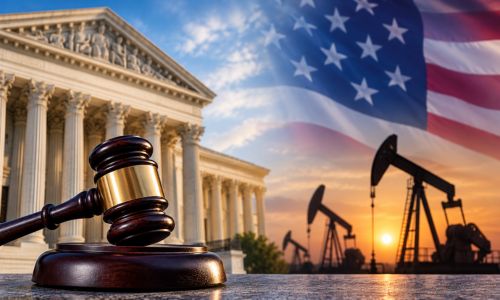

Montgomery, AL – Alabama Attorney General Steve Marshall announced that the U.S. District Court for the Northern District of New York has ruled New York’s Climate Change Superfund Act unenforceable, finding that it is preempted by federal law.
Marshall joined a coalition of attorneys general led by West Virginia in challenging the law, along with the Trump administration and representatives of the coal, oil and natural gas industries. The legislation sought to impose $75 billion in assessments on certain energy producers for fossil fuel production dating from 2000 through 2024.
The court heard arguments in West Virginia v. James in late July. Chief Judge Brenda Sannes subsequently issued a written ruling in favor of West Virginia and the other plaintiffs, concluding that the law was “simply beyond the limits of state law.”
According to the attorney general’s announcement, the court found that New York’s law conflicts with federal interests in maintaining uniform air pollution regulations. The ruling determined that the federal Clean Air Act establishes the governing framework for interstate air pollution and that New York’s measure could not be enforced because of that conflict.
Marshall said the decision protects Alabama energy workers and consumers from the potential effects of the law.
“This ruling puts a stop to New York’s attempt to penalize two decades of lawful energy production that has put Alabamians to work and kept energy affordable for families and businesses across our state,” Marshall said.
The attorney general also criticized the legislation as an attempt to regulate the energy industry beyond New York’s borders. Supporters of climate superfund laws have argued that such measures are intended to require major fossil fuel producers to contribute to the costs of addressing climate-related damage and adaptation.
The New York ruling is the first court decision addressing this type of climate superfund legislation, according to Marshall’s office. The coalition is also challenging a similar law in Vermont, while related legislation is pending in several other states.
Alabama joined West Virginia, Arkansas, Georgia, Idaho, Iowa, Kansas, Kentucky, Louisiana, Mississippi, Missouri, Montana, Nebraska, North Dakota, Ohio, Oklahoma, South Carolina, South Dakota, Tennessee, Texas, Utah and Wyoming in the lawsuit.