
Weaver, AL — Community Awareness Program Highlights Dangers of Drugs and Human Trafficking, Urges Parental Involvement
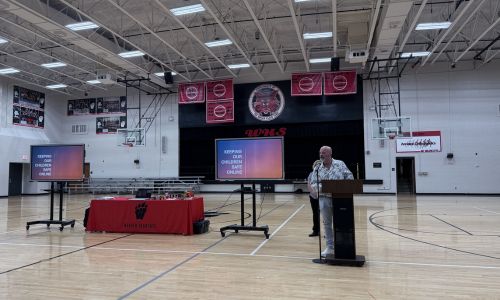
A community-wide drug and human trafficking awareness program was held at Weaver High School, bringing together local officials, educators, and residents for an in-depth discussion on two growing concerns impacting families across Calhoun County: substance abuse and the exploitation of children.

The event was organized by Calhoun County Board of Education Member Tobi Burt, who opened the evening by emphasizing the importance of educating both students and parents.
Burt told attendees that while schools provide training on many issues, the evolving nature of drugs and online threats requires direct community engagement. “It’s important that we educate not only our children, but we educate the parents,” he said, noting that nearly every family is affected in some way by addiction or related challenges.
Focus on Online Safety and Trafficking
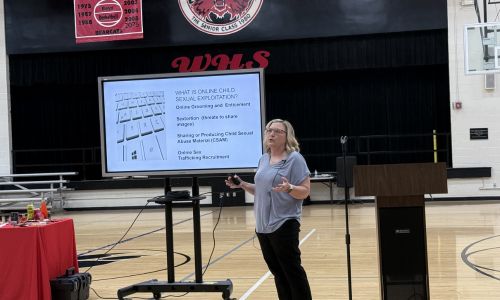
The program’s first major segment centered on human trafficking, child exploitation, and online safety, led by Candice Davis.
Davis shared both data and personal experience, explaining how modern trafficking often begins online through social media, gaming platforms, and messaging apps. She discussed dangers such as online enticement, sextortion, and the spread of CSAM (child sexual abuse material), stressing that many children are approached without their parents’ knowledge.
She also spoke about her own experience as a victim of childhood sexual abuse at the hands of a neighbor, using that perspective to underscore how often abuse comes from someone known and trusted, rather than a stranger.
Davis emphasized that these threats are not limited to larger cities, noting that Alabama continues to see a significant number of reported cases each year. She urged parents to stay actively involved in their children’s digital lives, explaining that awareness and communication are critical in preventing exploitation.
Law Enforcement Perspective
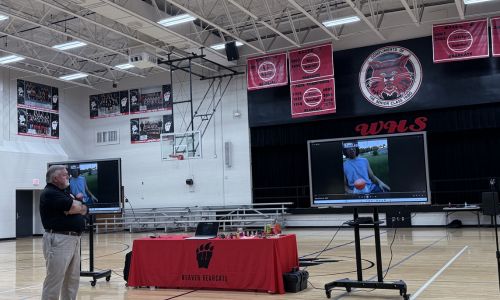
Calhoun County Sheriff Falon Hurst spoke between segments, reinforcing the severity of the issue from a law enforcement standpoint.
Hurst shared a case involving a corrections officer in the local area who was investigated for possessing and attempting to share child sexual abuse material. The individual was ultimately arrested following an investigation, highlighting that offenders can come from trusted or familiar environments.
He explained that cases involving exploitation and trafficking are far more common than many realize, and that law enforcement agencies often face overwhelming caseloads. As a result, they must prioritize the most severe cases, leaving many others still under investigation.
The sheriff emphasized that these crimes are occurring locally and require increased awareness from the community to help combat them.
Dangers of Emerging Drug Trends
The second major portion of the program focused on substance abuse, led by Mike Reese with the Alabama Alcoholic Beverage Control Board.
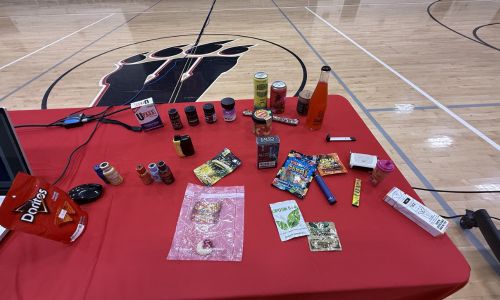
Reese detailed the growing presence of unregulated and potentially dangerous products being sold in convenience stores, including synthetic substances, THC-based items, and opioid-related products. He warned that many of these items are easily accessible to minors and often marketed in ways that appeal to younger audiences.
During his presentation, Reese also shared the personal impact of the opioid crisis, speaking about the loss of his own child. His remarks underscored the devastating reality of addiction and the long-term consequences it can have on families.
He explained how opioids, including heroin-based substances, can quickly lead to dependency and overdose, often by suppressing breathing. Reese also highlighted the increasing presence of vaping products containing THC, synthetic drugs, and even fentanyl, noting that some have led to severe medical emergencies among students.
Many of these products, he said, are not regulated, leaving users unaware of what they are consuming.
Local Perspective and Community Impact
Lt. Andy Hunter of the Weaver Police Department also addressed the importance of community awareness, particularly for parents and educators.
“I want parents and teachers to understand how important it is to educate ourselves on what our kids are seeing and dealing with now,” Hunter said. “Having spent half my career working in narcotics, I consider myself fairly educated on drug issues. But I learned a lot from Lt. Reese tonight. This gas station dope that our kids are easily getting their hands on is truly horrible stuff.”
He encouraged families to take an active role in learning about these dangers, adding, “Parents, please please take the time to attend this program and learn how to help save our kids. Your kids.”
Hunter also expressed appreciation for the leadership behind the initiative, stating, “I’d also like to thank Tobi Burt for recognizing the importance of educating our community on these dangers and for his work in coordinating the effort to bring this program to our schools.”
Community Impact and Call to Action
Throughout the evening, speakers repeatedly stressed that both drug abuse and human trafficking are deeply interconnected issues affecting communities of all sizes.
Burt returned at the conclusion of the program to thank attendees and reiterate the purpose of the initiative.
“This is all about reaching out and saving kids’ lives,” he said, encouraging continued community involvement and awareness efforts.
Upcoming Programs
Organizers announced that the awareness program will continue across the county, providing additional opportunities for parents and community members to attend:
- White Plains High School — April 30 at 6:00 PM
- Ohatchee High School — May 4 at 6:00 PM
- Alexandria High School — May 12 at 6:00 PM
Additional sessions are also being planned in other communities.
Moving Forward
The Weaver event underscored the importance of proactive education and collaboration between schools, law enforcement, and families. By addressing both drug-related dangers and the risks of online exploitation, organizers aim to equip parents with the knowledge needed to better protect their children.
As emphasized throughout the evening, awareness and involvement remain critical tools in addressing these evolving threats within the community.