

Calhoun County, AL – Through trial and error, I’ve learned that pulling weed roots too early can actually create bigger problems later. It feels productive in winter, but early weed removal can backfire in ways that aren’t obvious until spring.
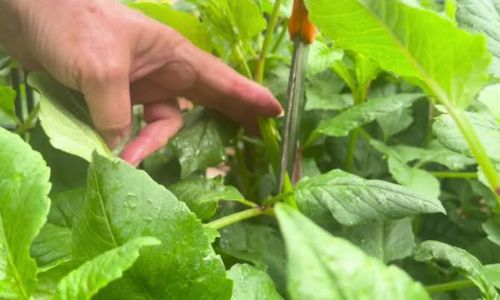
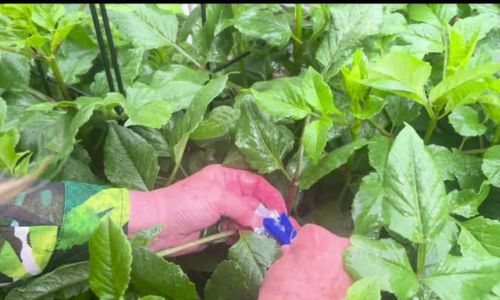
During the winter months, weeds often appear before many perennials have a chance to emerge. When those winter weeds are pulled too small, they frequently leave behind tiny root sprigs in the soil. By spring, those overlooked root fragments can grow into full-blown monsters that are much harder to remove.

Once you learn to identify weeds, it becomes easier to experiment with timing. Letting weeds mature just a bit before pulling allows their root systems to develop fully—making it far more likely that the entire root will come out cleanly. When that happens, weed removal becomes easier, faster, and more effective.
Another major reason to delay early weed pulling is to protect perennial seed germination. If you start aggressively removing weeds too soon, you can unknowingly disturb soil where perennial seeds are just beginning to sprout. Early enthusiasm can unintentionally damage the very plants you’re waiting to see.
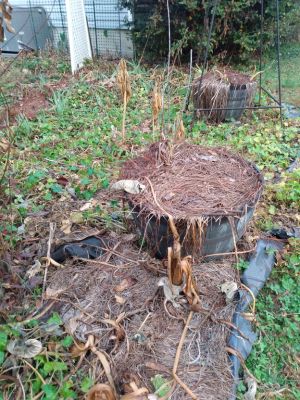
Winter landscapes also tend to have extra mulch to protect plants from freezing temperatures. While mulch does reduce weed growth, it doesn’t eliminate dormant weed roots hiding underneath. Mulch is helpful—but it’s not a guarantee.
In early spring, I remove about half of my mulch. This allows more sunlight to reach the soil so perennials can germinate stronger and healthier. Once I clearly see my spring perennials established, that’s when I shift into full weed-removal mode and become a very determined root extractor.
These principles work well for me in in-ground gardens, pots, and raised beds.
As for landscape fabric—often called weed block—it isn’t foolproof either. I do use it around shrubs, but weeds can and do penetrate some fabrics. When that happens, I have to cut the fabric to remove the weed roots, then secure the cut again using metal landscape pins. It’s effective, but definitely annoying.
The lesson? Winter gardening doesn’t have to mean rushing. Sometimes the smartest thing you can do is wait, observe, and let nature show you the right moment to act.
Betty Clark is a contributing writer. She has been an organic gardener since 1998. The signature flower she grows is Dahlias. She has a straw bale garden, a raised bed garden, and an in-ground garden. Both her surnames are from agricultural farming families (8 generations). Her hobbies include ancestry research, antiques, continued education classes, and workshops. She also has a background in marketing & promotions, including expos. To contact Betty Clark with gardening questions: bettyclark2151959@gmail.com