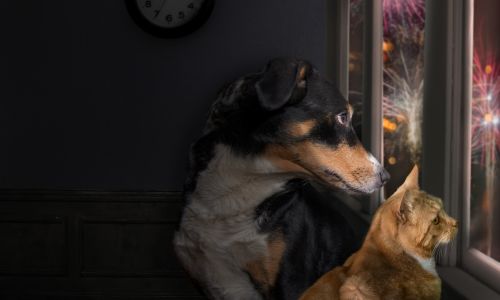

Calhoun County, AL – As Independence Day celebrations approach, pet owners are encouraged to prepare ahead of time to help keep their animals safe and reduce anxiety caused by fireworks. The following guidance comes from Nicole Ellis, a Certified Professional Dog Trainer and Pet Lifestyle Expert with Rover, who shared her expertise during an interview conducted for this article.
Ellis said that while fireworks are a holiday tradition for many families, they can be a significant source of stress and anxiety for both dogs and cats. One of the biggest mistakes pet owners make is waiting until fireworks begin before deciding how to help their pets.

Even animals that have remained calm during previous holidays can develop a fear of fireworks later in life or after a single frightening experience. Taking pets to fireworks displays, leaving them outside unattended, or walking them during peak fireworks activity can increase the risk of panic and escape.
Prepare Before Sunset
Planning ahead can make a significant difference in helping pets remain calm throughout the evening.
Ellis recommends taking dogs on a relaxed walk well before fireworks begin, allowing them to sniff and explore at their own pace. This type of mental enrichment can help lower stress levels and provide healthy stimulation before the evening festivities.
She advises keeping dogs on a leash during these walks, even if they are well trained, since unexpected fireworks or loud noises can cause even reliable pets to bolt.
Once back home, food puzzles, lick mats, stuffed enrichment toys, or similar activities can help occupy pets while encouraging relaxation before the first fireworks begin.
Create a Safe Space
Preparing a quiet, familiar retreat before fireworks start is another important step.
A crate that a pet already enjoys, an interior bedroom, laundry room, bathroom, or walk-in closet can all serve as safe spaces if the animal already associates the area with comfort. Soft bedding, favorite toys, and fresh water should all be available.
If owners use products such as dog ear protection or a Happy Hoodie, Ellis recommends introducing them well before the holiday so pets become comfortable wearing them in advance.
Pet owners who plan to be away during the evening may also want to consider arranging for a trusted pet sitter to remain with their animals, allowing pets to stay in their familiar environment while someone monitors them throughout the festivities.
Reduce Noise and Visual Stimulation
Closing curtains or blinds can help block the flashing lights from fireworks, while televisions, fans, white noise machines, or calming music may help reduce the impact of sudden loud sounds.
Ellis notes that these tools are generally most effective when combined with other calming strategies rather than relied upon as a single solution.
Exercise the Mind as Well as the Body
While physical exercise can be beneficial, Ellis emphasizes that mental enrichment is equally important.
A combination of relaxed walks, opportunities to sniff and explore, training games, and enrichment activities often helps create a calmer, more content dog than simply trying to tire one out with vigorous exercise.
The goal is not exhaustion but helping pets feel relaxed before fireworks begin.
Recognize Early Signs of Anxiety
Pets often display subtle signs of stress before reaching full panic.
Early warning signs may include:
- Lip licking
- Yawning
- Trembling
- Pacing
- Excessive panting
- Pinned-back ears
- Dilated pupils
- Refusing treats or food
- Hiding
- Becoming unusually clingy
As anxiety escalates, some pets may bark or vocalize excessively, attempt to escape, scratch at doors or windows, injure themselves trying to get out, or completely shut down.
Recognizing these behaviors early gives owners the best opportunity to intervene before anxiety becomes severe.
Prevent Escapes
Animal shelters typically experience a sharp increase in lost pets during the Fourth of July holiday.
To reduce that risk, Ellis recommends:
- Walking dogs before fireworks begin.
- Keeping dogs and cats indoors during fireworks.
- Using a leash anytime dogs are outside, even in fenced yards.
- Checking that collars and harnesses fit properly.
- Ensuring identification tags and microchip information are current.
- Keeping doors, gates, and windows securely closed.
- Using baby gates or separating pets from entryways if guests will be coming and going.
Even pets that do not normally wear collars should wear one with current identification tags throughout the holiday weekend.
Calming Products May Help
Products such as ThunderShirts, compression garments, pheromone diffusers, calming sprays, or calming supplements may help some pets cope with fireworks.
Ellis recommends introducing these products several days—or even weeks—before the holiday rather than trying something new on the evening of the fireworks.
For pets with severe noise anxiety, these products often work best when combined with environmental management and, when appropriate, prescription medication recommended by a veterinarian.
Know When to Contact Your Veterinarian
If a pet has previously experienced severe fear, attempted to escape, stopped eating during fireworks, or completely panicked during loud celebrations, Ellis recommends speaking with a veterinarian before the holiday.
Prescription medications are available for many pets and can significantly improve their comfort and welfare during fireworks when used under veterinary guidance.
Helping Puppies and Kittens
For puppies and kittens experiencing their first Fourth of July, Ellis says the goal should not be forcing them to “get used to” fireworks.
Instead, owners should focus on creating positive experiences indoors with enrichment activities, treats, toys, and a comfortable safe space.
If young pets notice distant fireworks while remaining relaxed, calmly rewarding that behavior with treats or play can help build positive associations with loud noises.
Rather than taking young animals to fireworks displays or leaving them home alone, Ellis says creating a calm, supportive environment can help shape their confidence around loud noises for years to come.
With some advance planning and preparation, pet owners can help reduce stress, prevent escapes, and make the Independence Day holiday safer and more comfortable for their four-legged family members.